


Scientists at Oxford University have discovered the oldest known population of plant root stem cells in a 320 million-year-old fossil.

| Health & Medicine | June 2, 2016 06:38 PM |
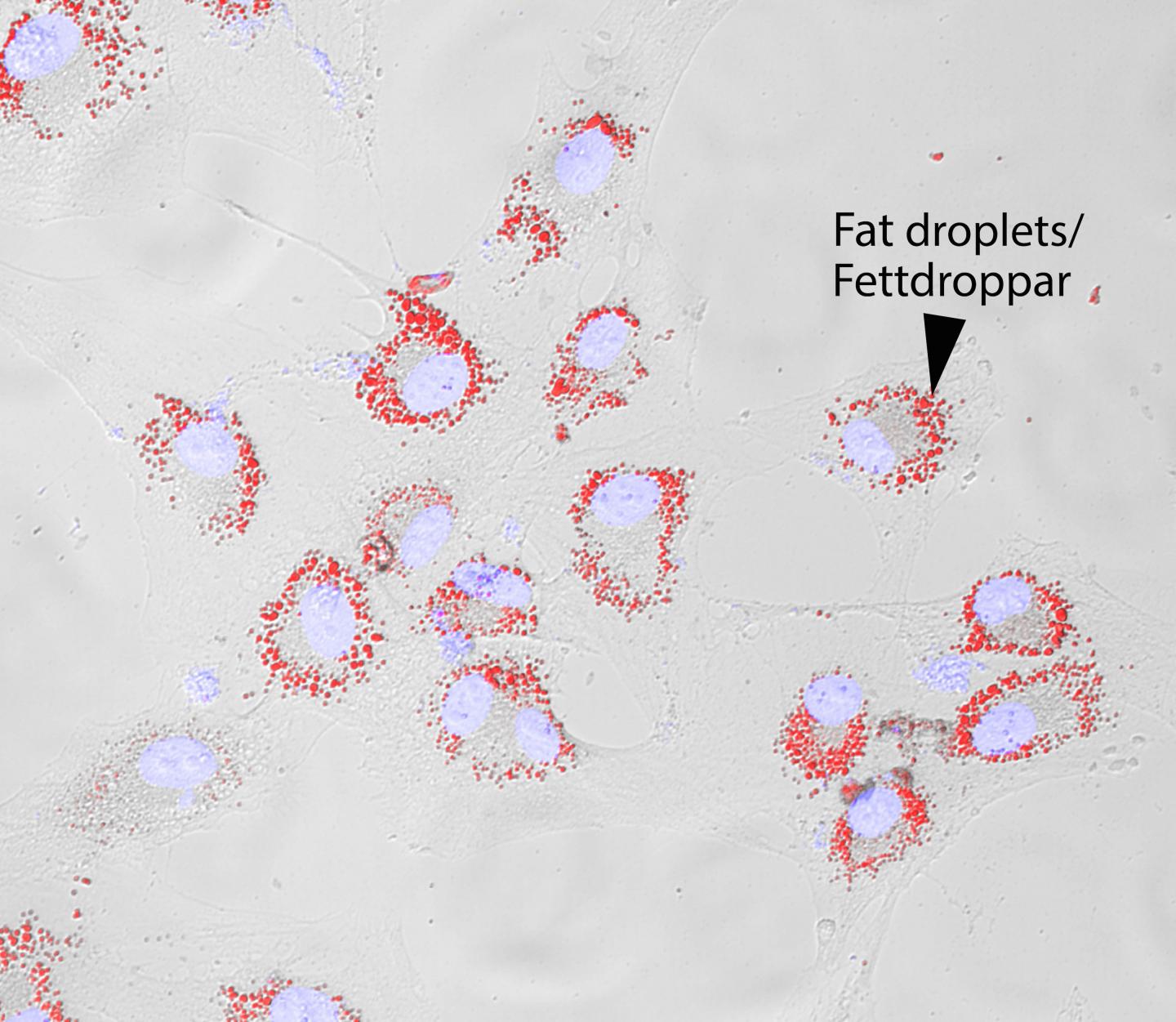
The cell images represent cancer cells where the cell nuclei are depicted in light blue and the fat droplets in red. It has been established that not all cancer cells are equally aggressive - most can be neutralised with radiation and chemotherapy. Researchers at Lund University in Sweden have now discovered that some cancer cells can accumulate fat droplets, which appear to make them more aggressive and increase their ability to spread.
| Full story | 0 Comments | 7231 views |
| Health & Medicine | June 2, 2016 06:38 PM |
At any given moment, the human genome spells out thousands of genetic words telling our cells which proteins to make. Each word is read by a molecule known as a tRNA.
| Full story | 0 Comments | 6146 views |

| Environment | June 2, 2016 06:38 PM |
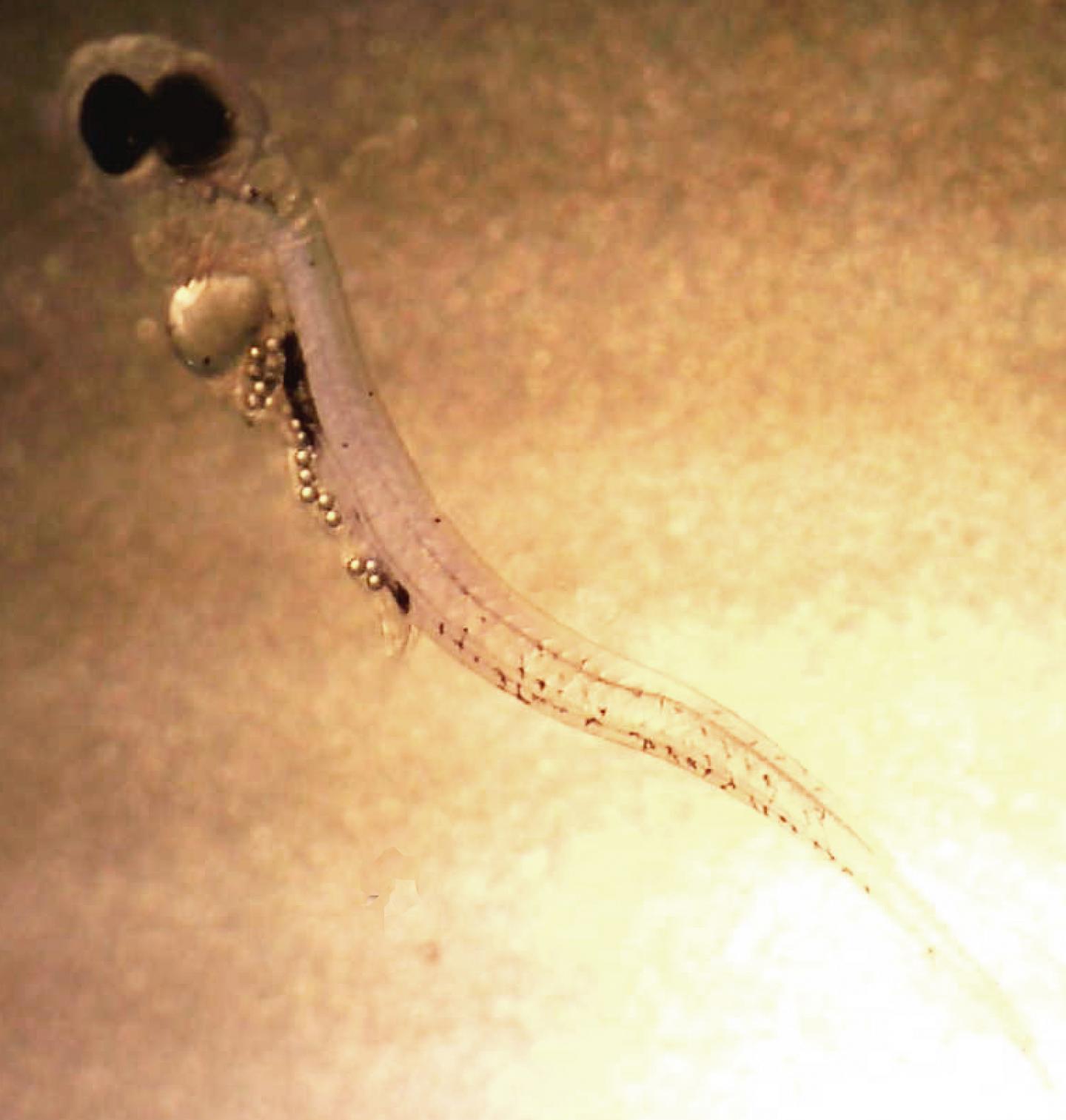
Larval perch from the Baltic Sea that has filled its stomach with microplastic waste particles. In a new study, published in Science, researchers from Uppsala University found that larval fish exposed to microplastic particles during development displayed changed behaviors and stunted growth which lead to greatly increased mortality rates. The researchers discovered that larval perch that had access to microplastic particles only ate plastic and ignored their natural food source of free-swimming zooplankton.
| Full story | 0 Comments | 10104 views |

| Molecular & Cell Biology | June 2, 2016 06:38 PM |
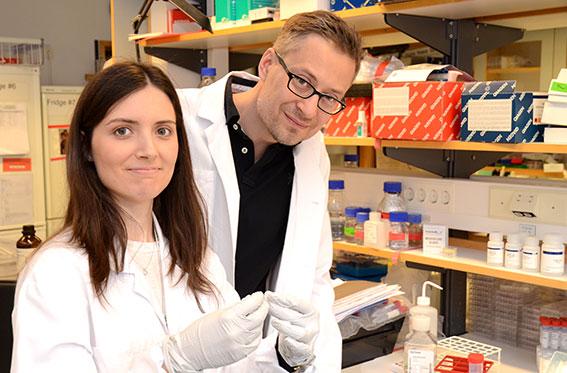
Johan Flygare and Sandra Capellera. Eight days. That's how long it takes for skin cells to reprogram into red blood cells. Researchers at Lund University in Sweden, together with colleagues at Center of Regenerative Medicine in Barcelona, have successfully identified the four genetic keys that unlock the genetic code of skin cells and reprogram them to start producing red blood cells instead.
| Full story | 0 Comments | 6603 views |
| Molecular & Cell Biology | June 2, 2016 06:38 PM |
For a long time dismissed as "junk DNA", we now know that also the regions between the genes fulfil vital functions. Mutations in those DNA regions can severely impair development in humans and may lead to serious diseases later in life. Until now, however, regulatory DNA regions have been hard to find. Scientists around Prof. Julien Gagneur, Professor for Computational Biology at the Technical University of Munich (TUM) and Prof. Patrick Cramer at the Max Planck Institute (MPI) for Biophysical Chemistry in Göttingen have now developed a method to find regulatory DNA regions which are active and controlling genes.
| Full story | 0 Comments | 6646 views |

- In some genetic cases of microcephaly, stem cells fail to launch
- Yale team discovers how Zika virus causes fetal brain damage
- Scientists uncover the way a common cell enzyme alerts the body to invading bacteria
- Arctic gives clues on worst mass extinction of life
- Calcium channel blockers caught in the act at atomic level
Search Bio News Net
Free Biology Newsletter
- Flexibility That A.C.A. Lent to Work Force Is Threatened by...International Herald Tribune
- Bacteria Behind Legionnaires’ Disease Found at New York Police StationInternational Herald Tribune
- Prescription Price Crisis? 28 Million Americans See Spike in Drug...MSNBC.com: Health
- Seizing on Opioid Crisis, a Drug Maker Lobbies Hard for...International Herald Tribune
- Republicans are taking a big political risk on health careAP Health News
- Why We're So Divided Over Saving WolvesNational Geographic News