


This image shows an abnormally low lake level at Horseshoe Lake in the high-elevation Mammoth Lakes Basin, Sierra Nevada Mountains, This photo was taken June 2015. A new study says that global warming has measurably worsened the ongoing California drought. While scientists largely agree that natural weather variations have caused a lack of rain, an emerging consensus says that rising temperatures may be making things worse by driving moisture from plants and soil into the air. The new study is the first to estimate how much worse: as much as a quarter. The findings suggest that within a few decades, continually increasing temperatures and resulting moisture losses will push California into even more persistent aridity. The study appears this week in the journal Geophysical Research Letters.

| Environment | August 20, 2015 06:01 PM |
| Full story | 0 Comments | 7828 views |

| Molecular & Cell Biology | August 20, 2015 06:01 PM |
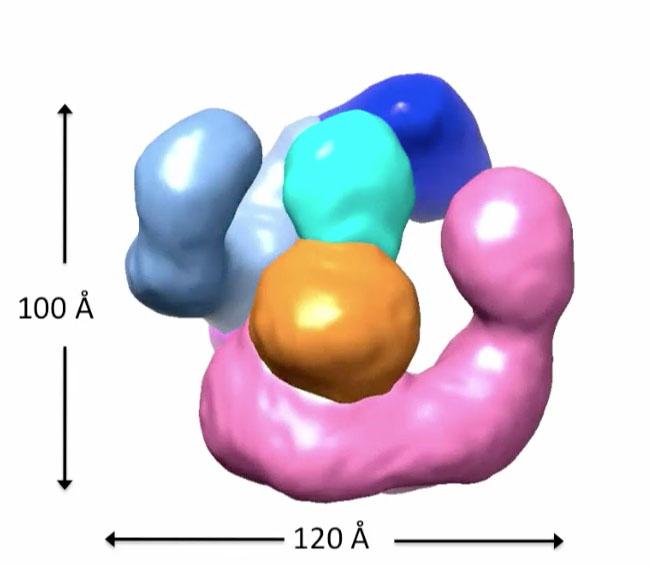
UC Davis researchers show how four proteins come together to make the machine that assembles tubulin, the building block of microtubules. When they think about how cells put together the molecules that make life work, biologists have tended to think of assembly lines: Add A to B, tack on C, and so on. But the reality might be more like a molecular version of a 3-D printer, where a single mechanism assembles the molecule in one go.
| Full story | 0 Comments | 5934 views |

| AIDS & HIV | August 20, 2015 06:01 PM |
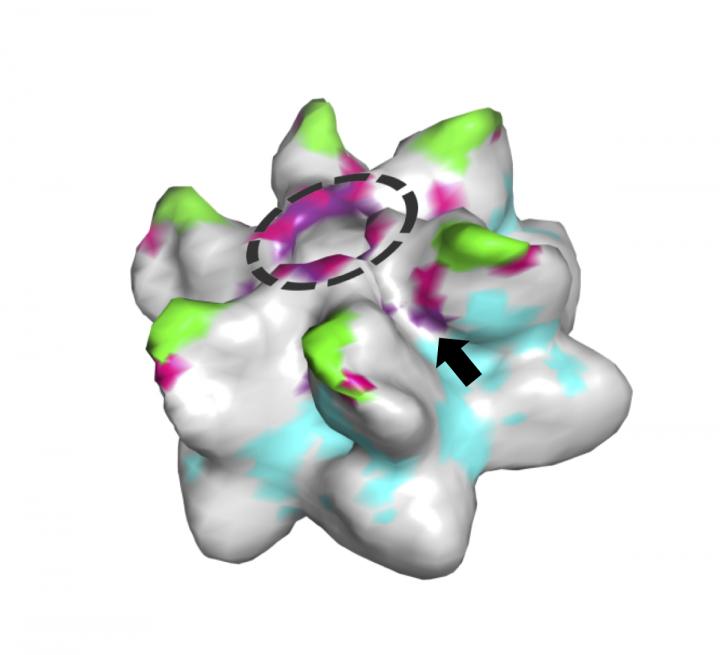
This is a model of a retrovirus capsid hexamer, showing the conserved beta-hairpin domains common to most kinds of retroviruses (circled) and a pocket containing additional sites thought to affect... Disease-causing viruses engage their hosts in ongoing arms races: positive selection for antiviral genes increases host fitness and survival, and viruses in turn select for mutations that counteract the antiviral host factors. Studying such adaptive mutations can provide insights into the distant history of host-virus interactions. A study published on August 20th in PLOS Pathogens of antiviral gene sequences in African monkeys suggests that lentiviruses closely related to HIV have infected primates in Africa as far back as 16 million years.
| Full story | 0 Comments | 6387 views |

- In some genetic cases of microcephaly, stem cells fail to launch
- Yale team discovers how Zika virus causes fetal brain damage
- Scientists uncover the way a common cell enzyme alerts the body to invading bacteria
- Arctic gives clues on worst mass extinction of life
- Calcium channel blockers caught in the act at atomic level
Search Bio News Net
Free Biology Newsletter
- Flexibility That A.C.A. Lent to Work Force Is Threatened by...International Herald Tribune
- Bacteria Behind Legionnaires’ Disease Found at New York Police StationInternational Herald Tribune
- Prescription Price Crisis? 28 Million Americans See Spike in Drug...MSNBC.com: Health
- Seizing on Opioid Crisis, a Drug Maker Lobbies Hard for...International Herald Tribune
- Republicans are taking a big political risk on health careAP Health News
- Why We're So Divided Over Saving WolvesNational Geographic News