

It's hard to comprehend how bad the current rate of species extinction around the world has become without knowing what it was before people came along. The newest estimate is that the pre-human rate was 10 times lower than scientists had thought, which means that the current level is 10 times worse.

| Molecular & Cell Biology | September 3, 2014 05:17 AM |
All human cells contain essentially the same DNA sequence – their genetic information. How is it possible that shapes and functions of cells in the different parts of the body are so different? While every cell's DNA contains the same construction master plan, an additional regulatory layer exists that determines which of the many possible DNA programs are active. This mechanism involves modifications of genome-bound histone proteins or the DNA itself with small chemical groups (e.g. methylation). It acts on top of the genetic information and is thus called 'epi'-genetic from the corresponding Greek word that means 'above' or 'attached to'.
| Full story | 0 Comments | 6772 views |

| Biology | September 3, 2014 05:17 AM |
Move over antibiotic ointment, there might be a new salve to dominate medicine cabinets of the future, and it comes from an unlikely place—the lowly salamander. Salamanders may not be the cuddliest of animals, but they can regenerate lost limbs and achieve amazing recovery of seriously damaged body parts. Now, a new report published in the September 2014 issue of The FASEB Journal, identifies a small protein (called a "peptide") from the skin of salamanders that may be the key to unlocking the secret of this amazing wound healing trick in humans.
| Full story | 0 Comments | 9916 views |
| Molecular & Cell Biology | September 3, 2014 05:17 AM |
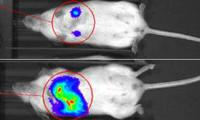
This image depicts a tumor with reduced levels of enzyme UBC13 (top) and a control tumor (bottom) that has spread to the lungs. Researchers at the University of California, San Diego School of Medicine have identified an enzyme that controls the spread of breast cancer. The findings, reported in the current issue of PNAS, offer hope for the leading cause of breast cancer mortality worldwide. An estimated 40,000 women in America will die of breast cancer in 2014, according to the American Cancer Society.
| Full story | 0 Comments | 9817 views |

- In some genetic cases of microcephaly, stem cells fail to launch
- Yale team discovers how Zika virus causes fetal brain damage
- Scientists uncover the way a common cell enzyme alerts the body to invading bacteria
- Arctic gives clues on worst mass extinction of life
- Calcium channel blockers caught in the act at atomic level
Search Bio News Net
Free Biology Newsletter
- Flexibility That A.C.A. Lent to Work Force Is Threatened by...International Herald Tribune
- Bacteria Behind Legionnaires’ Disease Found at New York Police StationInternational Herald Tribune
- Prescription Price Crisis? 28 Million Americans See Spike in Drug...MSNBC.com: Health
- Seizing on Opioid Crisis, a Drug Maker Lobbies Hard for...International Herald Tribune
- Republicans are taking a big political risk on health careAP Health News
- Why We're So Divided Over Saving WolvesNational Geographic News