

A study led by researchers from Lawrence Berkeley National Laboratory has found for the first time that thirdhand smoke—the noxious residue that clings to virtually all surfaces long after the secondhand smoke from a cigarette has cleared out—causes significant genetic damage in human cells.

| Health & Medicine | June 20, 2013 04:17 PM |
Scientists have discovered the survival secret to a genetic mutation that stokes leukemia cells, solving an evolutionary riddle and paving the way to a highly targeted therapy for leukemia. In a paper published today in Cell, researchers at NYU Langone Medical Center describe how a mutated protein, called Fbxw7, behaves differently when expressed in cancer cells versus healthy cells. "Fbxw7 is essential for making blood cells, so the big mystery is why a mutation on a gene so important for survival would persist," says lead author Iannis Aifantis, PhD, chair of pathology at NYU Langone Medical Center and an Early Career Scientist at Howard Hughes Medical Institute. "What we've found is that the mutation affects cancerous cells but not healthy cells."
| Full story | 0 Comments | 5218 views |

| Biology | June 20, 2013 04:17 PM |
A line of genetically modified mice that Western University scientists call "Forrest Gump" because, like the movie character, they can run far but they aren't smart, is furthering the understanding of a key neurotransmitter called acetylcholine (ACh). Marco Prado and his team at Robarts Research Institute say the mice show what happens when too much of this neurotransmitter becomes available in the brain. Boosting ACh is a therapeutic target for Alzheimer's disease because it's found in reduced amounts when there's cognitive failure. Prado's research is published in the Journal of Neuroscience.
| Full story | 0 Comments | 5843 views |

| Environment | June 20, 2013 04:17 PM |
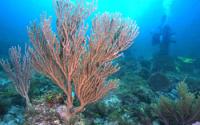
Researchers study how coral responds to ocean acidification at natural undersea springs. Ocean acidification due to rising carbon dioxide levels reduces the density of coral skeletons, making coral reefs more vulnerable to disruption and erosion.
| Full story | 0 Comments | 6489 views |

- In some genetic cases of microcephaly, stem cells fail to launch
- Yale team discovers how Zika virus causes fetal brain damage
- Scientists uncover the way a common cell enzyme alerts the body to invading bacteria
- Arctic gives clues on worst mass extinction of life
- Calcium channel blockers caught in the act at atomic level
Search Bio News Net
Free Biology Newsletter
- Flexibility That A.C.A. Lent to Work Force Is Threatened by...International Herald Tribune
- Bacteria Behind Legionnaires’ Disease Found at New York Police StationInternational Herald Tribune
- Prescription Price Crisis? 28 Million Americans See Spike in Drug...MSNBC.com: Health
- Seizing on Opioid Crisis, a Drug Maker Lobbies Hard for...International Herald Tribune
- Republicans are taking a big political risk on health careAP Health News
- Why We're So Divided Over Saving WolvesNational Geographic News