

Nearly 100 years after a British neurologist first mapped the blind spots caused by missile wounds to the brains of soldiers, Perelman School of Medicine researchers at the University of Pennsylvania have perfected his map using modern-day technology. Their results create a map of vision in the brain based upon an individual's brain structure, even for people who cannot see. Their result can, among other things, guide efforts to restore vision using a neural prosthesis that stimulates the surface of the brain. The study appears in the latest issue of Current Biology, a Cell Press journal.

| Stem Cell Research | October 5, 2012 03:01 AM |
Researchers have discovered a way to generate new human neurons from another type of adult cell found in our brains. The discovery, reported in the October 5th issue of Cell Stem Cell, a Cell Press publication, is one step toward cell-based therapies for the treatment of neurodegenerative diseases, such as Alzheimer's and Parkinson's.
| Full story | 0 Comments | 12659 views |

| Molecular & Cell Biology | October 5, 2012 03:01 AM |
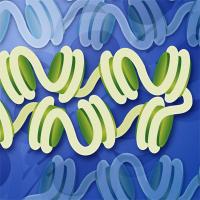
This shows DNA packaged into 10-nm chromatin fibers. Scientists in Canada and the United States have used three-dimensional imaging techniques to settle a long-standing debate about how DNA and structural proteins are packaged into chromatin fibres. The researchers, whose findings are published in EMBO reports, reveal that the mouse genome consists of 10-nm chromatin fibres but did not find evidence for the wider 30-nm fibres that were previously thought to be important components of the DNA architecture.
| Full story | 0 Comments | 8972 views |

| Biology | October 5, 2012 03:01 AM |
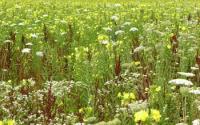
This is a large natural population of evening primrose (yellow), which is a common plant in eastern North America.
Agrawal's team set up 16 identical plots. During each growing season for... At first blush, many people would probably love to get rid of insects, such as pesky mosquitoes, ants and roaches. But a new study indicates that getting rid of insects could trigger some unwelcome ecological consequences, such as the rapid loss of desired traits in plants, including their good taste and high yields.
| Full story | 0 Comments | 15042 views |
| Biology | October 5, 2012 03:01 AM |
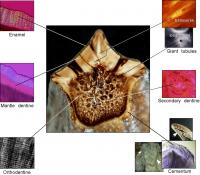
This cross-section of a duck-billed dinosaur tooth (Edmontosaurus) shows the remarkably complex architecture. Six main tissues compose the tooth, where most reptiles only have two (enamel and orthodentine). A team of paleontologists and engineers has found that duck-billed dinosaurs had an amazing capacity to chew tough and abrasive plants with grinding teeth more complex than those of cows, horses, and other well-known modern grazers. Their study, which is published today in the journal Science, is the first to recover material properties from fossilized teeth.
| Full story | 0 Comments | 9869 views |

- In some genetic cases of microcephaly, stem cells fail to launch
- Yale team discovers how Zika virus causes fetal brain damage
- Scientists uncover the way a common cell enzyme alerts the body to invading bacteria
- Arctic gives clues on worst mass extinction of life
- Calcium channel blockers caught in the act at atomic level
Search Bio News Net
Free Biology Newsletter
- Flexibility That A.C.A. Lent to Work Force Is Threatened by...International Herald Tribune
- Bacteria Behind Legionnaires’ Disease Found at New York Police StationInternational Herald Tribune
- Prescription Price Crisis? 28 Million Americans See Spike in Drug...MSNBC.com: Health
- Seizing on Opioid Crisis, a Drug Maker Lobbies Hard for...International Herald Tribune
- Republicans are taking a big political risk on health careAP Health News
- Why We're So Divided Over Saving WolvesNational Geographic News