

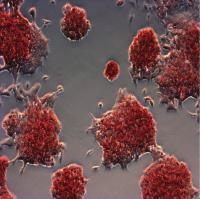
Induced pluripotent stem cells generated using a kinase inhibitor. The process researchers use to generate induced pluripotent stem cells (iPSCs)—a special type of stem cell that can be made in the lab from any type of adult cell—is time consuming and inefficient. To speed things up, researchers at Sanford-Burnham Medical Research Institute (Sanford-Burnham) turned to kinase inhibitors. These chemical compounds block the activity of kinases, enzymes responsible for many aspects of cellular communication, survival, and growth. As they outline in a paper published September 25 in Nature Communications, the team found several kinase inhibitors that, when added to starter cells, help generate many more iPSCs than the standard method. This new capability will likely speed up research in many fields, better enabling scientists around the world to study human disease and develop new treatments.

| Stem Cell Research | September 25, 2012 06:14 PM |
| Full story | 0 Comments | 12342 views |
| Stem Cell Research | September 25, 2012 06:14 PM |
In a study to investigate how transplanted islet cells can differentiate and mature into insulin-producing pancreatic cells, a team of Japanese researchers found that using a specific set of transcription factors (proteins that bind to specific DNA sequences) could be transduced into mouse pancreatic stem cells (mPSCs) using Sendai virus (SeV), a mouse influenza virus, as a carrier, or vector. The study is published in a recent issue of Cell Medicine [3(1)], now freely available on-line at: http://www.ingentaconnect.com/content/cog/cm.
| Full story | 0 Comments | 7660 views |

| Molecular & Cell Biology | September 25, 2012 06:14 PM |
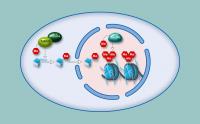
Methylation of histones within heterochromatin: The enzymes Prdm3 and Prdm16 attach a methyl group to histone H3. In the cell nucleus, Suv39h attaches two further methyl groups. To fit the two-meter long DNA molecule into a cell nucleus that is only a few thousandths of a millimetre in size, long sections of the DNA must be strongly compacted. Epigenetic marks maintain these sections, known as heterochromatin. Scientists of the Max Planck Institute of Immunobiology and Epigenetics in Freiburg have now discovered two further mechanisms necessary for the formation of heterochromatin. The research group, led by Thomas Jenuwein, describes two novel enzymes, Prdm3 and Prdm16, which attach a methyl group to a particular packaging protein of the DNA. These epigenetic marks assure that heterochromatin, and with it the structure of the cell nucleus, remain intact. Moreover, in an additional study they have determined that transcription factors bind within heterochromatin and repress the output of non-coding RNA. In contrast to less densely compacted regions known as euchromatin, in which the transcription factors accumulate at specific sites, the binding sites of transcription factors in heterochromatin are much more randomly distributed.
| Full story | 0 Comments | 7827 views |

- In some genetic cases of microcephaly, stem cells fail to launch
- Yale team discovers how Zika virus causes fetal brain damage
- Scientists uncover the way a common cell enzyme alerts the body to invading bacteria
- Arctic gives clues on worst mass extinction of life
- Calcium channel blockers caught in the act at atomic level
Search Bio News Net
Free Biology Newsletter
- Flexibility That A.C.A. Lent to Work Force Is Threatened by...International Herald Tribune
- Bacteria Behind Legionnaires’ Disease Found at New York Police StationInternational Herald Tribune
- Prescription Price Crisis? 28 Million Americans See Spike in Drug...MSNBC.com: Health
- Seizing on Opioid Crisis, a Drug Maker Lobbies Hard for...International Herald Tribune
- Republicans are taking a big political risk on health careAP Health News
- Why We're So Divided Over Saving WolvesNational Geographic News