


It is not unusual for babies to be born with congenital heart defects. This is because the development of the heart in the embryo is a process which is not only extremely complex, but also error-prone. Scientists from the Max Planck Institute for Heart and Lung Research in Bad Nauheim have now identified a key molecule that plays a central role in regulating the function of stem cells in the heart. As a result, not only could congenital heart defects be avoided in future, but new ways of stimulating the regeneration of damaged hearts in adults may be opened up.
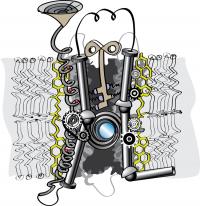
More than 50 percent of therapeutic drugs target GPCRs, including allergy and heart medication, drugs that target the central nervous system, and anti-depressants. Readers of the top-ranked scientific journals Science and Nature might have noticed a recent wave of articles, most recently in the July 13, 2012 issue of Science, with deep importance for biology and medicine. These papers, all published this year by collaborations headed by the Scripps Research Institute laboratory of Professor Raymond Stevens, illuminate a large and medically important family of proteins called G protein-coupled receptors (GPCRs).
| Full story | 0 Comments | 7069 views |

- In some genetic cases of microcephaly, stem cells fail to launch
- Yale team discovers how Zika virus causes fetal brain damage
- Scientists uncover the way a common cell enzyme alerts the body to invading bacteria
- Arctic gives clues on worst mass extinction of life
- Calcium channel blockers caught in the act at atomic level
Search Bio News Net
Free Biology Newsletter
- Flexibility That A.C.A. Lent to Work Force Is Threatened by...International Herald Tribune
- Bacteria Behind Legionnaires’ Disease Found at New York Police StationInternational Herald Tribune
- Prescription Price Crisis? 28 Million Americans See Spike in Drug...MSNBC.com: Health
- Seizing on Opioid Crisis, a Drug Maker Lobbies Hard for...International Herald Tribune
- Republicans are taking a big political risk on health careAP Health News
- Why We're So Divided Over Saving WolvesNational Geographic News