

New research published online in the FASEB Journal suggests that a specific enzyme, called 5-lipoxygenase, plays a key role in cell death induced by microgravity environments, and that inhibiting this enzyme will likely help prevent or lessen the severity of immune problems in astronauts caused by spaceflight. Additionally, since space conditions initiate health problems that mimic the aging process on Earth, this discovery may also lead to therapeutics that extend lives by bolstering the immune systems of the elderly.

| Molecular & Cell Biology | April 30, 2012 05:12 PM |
University of Iowa biologists have advanced the knowledge of human neurodevelopmental disorders by finding that a lack of a particular group of cell adhesion molecules in the cerebral cortex -- the outermost layer of the brain where language, thought and other higher functions take place -- disrupts the formation of neural circuitry.
| Full story | 0 Comments | 8586 views |
| Molecular & Cell Biology | April 30, 2012 05:12 PM |
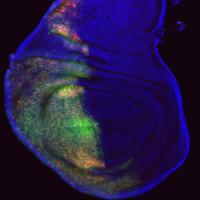
Polycomb repressive complex 2 (PRC2) was originally discovered in fruit flies as a transcriptional repressor. Historically, fly and human Polycomb proteins were considered textbook exemplars of transcriptional repressors, or proteins that silence the process by which DNA gives rise to new proteins. Now, work by a team of researchers at the Stowers Institute for Medical Research challenges that dogma.
| Full story | 0 Comments | 7058 views |

- In some genetic cases of microcephaly, stem cells fail to launch
- Yale team discovers how Zika virus causes fetal brain damage
- Scientists uncover the way a common cell enzyme alerts the body to invading bacteria
- Arctic gives clues on worst mass extinction of life
- Calcium channel blockers caught in the act at atomic level
Search Bio News Net
Free Biology Newsletter
- Flexibility That A.C.A. Lent to Work Force Is Threatened by...International Herald Tribune
- Bacteria Behind Legionnaires’ Disease Found at New York Police StationInternational Herald Tribune
- Prescription Price Crisis? 28 Million Americans See Spike in Drug...MSNBC.com: Health
- Seizing on Opioid Crisis, a Drug Maker Lobbies Hard for...International Herald Tribune
- Republicans are taking a big political risk on health careAP Health News
- Why We're So Divided Over Saving WolvesNational Geographic News