

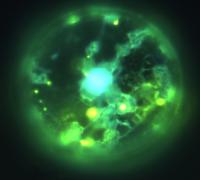
Georgia Tech researchers found that diatoms naturally remove phosphorus from the oceans. Scientists at the Georgia Institute of Technology have discovered a new way that phosphorus is naturally removed from the oceans – its stored in diatoms. The discovery opens up a new realm of research into an element that’s used for reproduction, energy storage and structural materials in every organism. Its understanding is vital to the continued quest to understand the growth of the oceans. The research appears in the May 2, 2008 edition of the journal Science.

| Environment | May 2, 2008 09:38 PM |
| Full story | 0 Comments | 7181 views |

| Health & Medicine | May 2, 2008 09:38 PM |
Heart failure patients at NewYork-Presbyterian Hospital/Columbia University Medical Center were among the first to be implanted with the HeartMate® II LVAS (Left Ventricular Assist System) -- a miniature mechanical pump that helps weak hearts pump blood -- that has now received approval by the FDA as of April 21 for broad use as bridge to transplantation. As part of clinical trials leading to approval, 22 patients received the new device at NewYork-Presbyterian/Columbia -- more than any other hospital in the New York area.
| Full story | 0 Comments | 12604 views |
| Health & Medicine | May 2, 2008 09:38 PM |
Scientists in Italy have discovered a new perspective in the study of infectious disease. Normally, such studies are based upon laboratory work looking at an organism and how it works within the human body.
| Full story | 0 Comments | 6234 views |

| Molecular & Cell Biology | May 2, 2008 09:38 PM |
Although the human genome has been sequenced, research into mechanism of action of genes has been hampered by the fact that most human genes have not been isolated. This is true for even the most common class of cancer-associated genes, the protein kinases, which mediate the majority of signaling events in cells by phosphorylating and modulating the activity of other proteins. It has been estimated by systematic gene sequencing efforts that up to a quarter of kinases may play a role in human cancers.
| Full story | 0 Comments | 6344 views |

| Biology | May 2, 2008 09:38 PM |
Scientists in Germany have discovered a new mechanism of infection for the most fatal bee disease. American Foulbrood (AFB) is the only infectious disease which can kill entire colonies of bees. Every year, this notifiable disease is causing considerable economic loss to beekeepers all over the world. The only control measure is to destroy the infected hive.
| Full story | 0 Comments | 6697 views |
| Health & Medicine | May 2, 2008 09:38 PM |
On the eve of the British Columbia inquiry into the death of Robert Dziekanski, a review of scientific data in CMAJ (Canadian Medical Association Journal) finds that in some cases, stun guns may stimulate the heart in experimental models. This evidence is contrary to current views that stun guns only affect skeletal muscles.
| Full story | 0 Comments | 6681 views |
| Environment | May 2, 2008 02:13 PM |
Although China currently has fewer invasive woody plants than the United States, China’s potential for invasion by nonnative trees and shrubs is high, according to an article in the May 2008 issue of BioScience. Authors Ewald Weber, of the University of Zurich in Switzerland, and Bo Li, of Fudan University in Shanghai, China, examined the factors associated with alien plant species invasions and compared the history of alien plant species introductions in the United States and China, countries of similar size and latitudinal span.
| Full story | 0 Comments | 7713 views |
| Biology | May 2, 2008 12:13 PM |
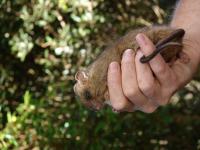
The greater dwarf cloud rat (Carpomys melanurus) was rediscovered in April 2008 -- 112 years after the first and only time it had ever been seen by scientists. Cloud rats are one of the most spectacular cases of adaptive radiation by mammals anywhere in the world, with at least 15 species ranging in size from 2.6 kg to 15 grams, all living only in the Philippines. A team of Filipino and American scientists have rediscovered a highly distinctive mammal ¨C a greater dwarf cloud rat ¨C that was last seen 112 years ago. Furthermore, it has never before been discovered in its natural habitat and was thought by some to be extinct.
| Full story | 0 Comments | 8017 views |
| Health & Medicine | May 2, 2008 10:13 AM |
A genetic mutation that can raise the amount of glucose in a person's blood to harmful levels is identified today in a study in the journal Science.
| Full story | 0 Comments | 6983 views |

- In some genetic cases of microcephaly, stem cells fail to launch
- Yale team discovers how Zika virus causes fetal brain damage
- Scientists uncover the way a common cell enzyme alerts the body to invading bacteria
- Arctic gives clues on worst mass extinction of life
- Calcium channel blockers caught in the act at atomic level
Search Bio News Net
Free Biology Newsletter
- Flexibility That A.C.A. Lent to Work Force Is Threatened by...International Herald Tribune
- Bacteria Behind Legionnaires’ Disease Found at New York Police StationInternational Herald Tribune
- Prescription Price Crisis? 28 Million Americans See Spike in Drug...MSNBC.com: Health
- Seizing on Opioid Crisis, a Drug Maker Lobbies Hard for...International Herald Tribune
- Republicans are taking a big political risk on health careAP Health News
- Why We're So Divided Over Saving WolvesNational Geographic News