


An experimental gene therapy to combat alpha-1 antitrypsin deficiency, a common hereditary disorder that causes lung and liver disease, has caused no harmful effects in patients and shows signs of being effective, University of Florida researchers say.

| Molecular & Cell Biology | November 21, 2006 07:36 PM |
Scientists have discovered that autoimmunity can be triggered in the thymus, where the immune system's T cells develop, if T cells fail to recognize just one of the body's thousands of proteins as "self." The research confirms an emerging view that autoimmunity can start in this cradle of the immune system, and not only at the sites where autoimmune diseases emerge, such as the pancreas in the case of type 1 diabetes, or the joints in rheumatoid arthritis.
| Full story | 0 Comments | 5199 views |
| Molecular & Cell Biology | November 21, 2006 06:36 PM |
A University of Utah study suggests that memories are held in our brains because certain proteins serve as anchors, holding other proteins in place to strengthen synapses, which are connections between nerve cells.
| Full story | 0 Comments | 6452 views |
| Molecular & Cell Biology | November 21, 2006 05:07 PM |
University of Oregon researchers have identified protein interactions that regulate the response of cells to steroid hormones. The discovery, they say, could lead to new ways to boost the effectiveness and reduce undesired side effects of steroid-hormone treatments and cancer drugs.
| Full story | 0 Comments | 5595 views |
| Molecular & Cell Biology | November 21, 2006 04:07 PM |
Parasite-infected dragonflies suffer the same metabolic disorders that have led to an epidemic of obesity and type-2 diabetes in humans, reveal the findings of research conducted at Penn State University that are due to be published in the 5 December 2006 issue of the Proceedings of the National Academy of Science and also in the PNAS early online edition at www.pnas.org on 21 November. The discovery expands the known taxonomic breadth of metabolic disease and suggests that the study of microbes found in human intestines may provide a greater understanding of the root causes of human metabolic dysfunction.
| Full story | 0 Comments | 5333 views |
| Molecular & Cell Biology | November 21, 2006 02:07 PM |
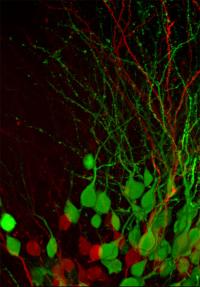
Dentate granule cells generated in the developing and adult hippocampus retrovirally labeled with green and red fluorescent proteins. Credit: Schinder et al. In mammals, the production of new brain cells occurs primarily at the time the nervous system is developing, although certain brain areas generate neurons throughout adulthood. One such area is the hippocampus, a part of the brain involved in the critical function of memory and spatial perception. Hippocampal cells, specifically dentate granule cells, are continuously produced in adults as well as in young animals. How these "adult-born" cells build their connections with the rest of the brain, and the extent to which they resemble "pup-born" cells, is of great interest to those who would like to coax other parts of adult brains to make new cells as a strategy for reversing the loss of function from trauma or degenerative disorders. To find out whether adult-born hippocampal neurons have different properties than mature neurons that arose when the brain was developing, Diego Laplagne, Alejandro Schinder, and colleagues compared how each type of neuron incorporated functionally into brain circuits.
| Full story | 0 Comments | 5747 views |

| Stem Cell Research | November 21, 2006 12:07 PM |
Biochemists at Oregon State University have developed a new method to identify the "DNA-binding transcription factors" that help steer stem cells into forming the wide variety of cells that ultimately make up all the organs and parts of a living vertebrate animal.
| Full story | 0 Comments | 10305 views |
| Molecular & Cell Biology | November 21, 2006 10:07 AM |
Using advanced new microscopy techniques in concert with sophisticated transgenic technologies, scientists at The Wistar Institute have for the first time created three-dimensional, time-lapse movies showing immune cells targeting cancer cells in live tumor tissues. In recorded experiments, immune cells called T cells can be seen actively migrating though tissues, making direct contact with tumor cells, and killing them.
| Full story | 0 Comments | 4669 views |

- In some genetic cases of microcephaly, stem cells fail to launch
- Yale team discovers how Zika virus causes fetal brain damage
- Scientists uncover the way a common cell enzyme alerts the body to invading bacteria
- Arctic gives clues on worst mass extinction of life
- Calcium channel blockers caught in the act at atomic level
Search Bio News Net
Free Biology Newsletter
- Flexibility That A.C.A. Lent to Work Force Is Threatened by...International Herald Tribune
- Bacteria Behind Legionnaires’ Disease Found at New York Police StationInternational Herald Tribune
- Prescription Price Crisis? 28 Million Americans See Spike in Drug...MSNBC.com: Health
- Seizing on Opioid Crisis, a Drug Maker Lobbies Hard for...International Herald Tribune
- Republicans are taking a big political risk on health careAP Health News
- Why We're So Divided Over Saving WolvesNational Geographic News