


If you have a look at the counter at the very bottom of the page, you'll notice something : we just went past 100,000 unique visits! A special thanks to visitors from Slashdot, SciTechDaily and Fark. If you feel like encouraging me, feel free to talk about the site to your friends who may be interested, or better yet, link to Biology News Net (or stories you find interesting). If we continue to attract more people interested in Biology, we may one day build a community were we can exchange ideas / talk about the latest news (which as you may have noticed, is nowhere to be found on the web). As a side note, I'm currently working on improving the comments/forum hybrid system (the quick reply form is an example); it should be ready soon enough.

| AIDS & HIV | May 17, 2005 06:50 PM |
Researchers have discovered that mammalian cells infected with HIV-1 engage a primitive defense mechanism that was previously observed only in plants and invertebrates. The research also reveals exactly how HIV-1 successfully thwarts this rare form of immunity in vertebrate cells. However, elucidation of the mechanism HIV-1 uses to protect itself provides some critical insight into a potential vulnerability within the HIV-1 molecule. Identification of what might be a long sought after weakness in the virus may have application for rational design of future anti-HIV-1 therapies. The study is published in the May issue of Immunity.
| Full story | 0 Comments | 5035 views |

| Molecular & Cell Biology | May 17, 2005 06:47 PM |
The immune system is a marvel of versatility, creating a variety of cells that develop in different ways to protect the body. To carry out these tasks, immune cells follow a career path that forks at various points in their development. In a report in the May 2005 issue of Immunity, Fox Chase Cancer Center scientists led by immunologists David L. Wiest, Ph.D. and Dietmar J. Kappes, Ph.D., show that cell-receptor signaling strength influences which course certain immature immune cells will take, suggesting a flexible new model for commitment to one lineage or another.
| Full story | 0 Comments | 4948 views |

| Environment | May 17, 2005 06:41 PM |
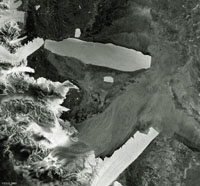
B-15A adjacent to Aviator, 16 MayEditor : We published a story earlier about a previous collision.
The mammoth B-15A iceberg appears poised to strike another floating Antarctic ice feature, a month on from a passing blow that broke off the end of the Drygalski ice tongue. As this Envisat image reveals, this time its target is the ice tongue of the Aviator Glacier.
First discovered in 1955, and named to mark the work done by airmen to open up the Antarctic continent, the Aviator Glacier is a major valley glacier descending from the plateau of Victoria Land along the west side of the Mountaineer Range. It enters the sea at Lady Newnes Bay, where it forms a floating ice tongue that extends into the water for about 25 kilometres.
| Full story | 0 Comments | 5453 views |

| Biology | May 17, 2005 06:40 PM |
A non-native bee mite is causing the dramatic and sudden collapse of bee colonies across the country, but Penn State researchers believe they have found the combination of factors that triggers colony deaths which includes suppression of the bee immune system by the mites.
The Varroa destructor mite is a honey bee parasite that feeds much like a tick on the body of a bee. The mites are about the size of a pin head, dark brown in color and visible on close inspection.
This bee mite probably arose in the Eastern or Chinese Honey Bee population and hopped over to the United States in 1987. They quickly infested western or European honey bees. One sign of infection is the presence of bees with deformed wings. Also, sometimes seemingly healthy colonies become ill and the complete hive collapses in about two weeks.
| Full story | 0 Comments | 7791 views |

| Health & Medicine | May 17, 2005 06:38 PM |
Whole-body MRI with an automatic moving table is effective for evaluating the entire skeleton in patients with suspected bone metastasis (cancer that has spread to the bone from other parts of the body) in a single imaging scan-and it only takes between 15 and 18 minutes, say two different European studies.
| Full story | 0 Comments | 5688 views |
| Health & Medicine | May 17, 2005 06:37 PM |
Researchers at UCLA and the Veterans Affairs Greater Los Angeles Healthcare System conducted the largest and most comprehensive study in comparing the cost-effectiveness of current modern drugs for treating hepatitis B -- a disease affecting 350 million worldwide.
Published in the May 17 Annals of Internal Medicine, the study may help physicians worldwide in making treatment decisions. Researchers note that a degree of uncertainly exists on how to best initiate hepatitis B treatment due to a constant influx of newer, more expensive drugs that all have varying risks and benefits.
| Full story | 0 Comments | 7152 views |

| Stem Cell Research | May 17, 2005 06:36 PM |
Scientists at Washington University School of Medicine in St. Louis have learned that a temporal "window of opportunity" was critical to their earlier successes in treating diabetic rats with embryonic pig tissues.
In those experiments, published in 2004, researchers were surprised to find that they didn't have to give anti-rejection drugs to diabetic rats treated with embryonic pig cell transplants. They had expected rats that received no immune suppression would reject the transplants. Instead, the new tissues engrafted with little difficulty, curing the rats of their diabetes.
| Full story | 0 Comments | 5311 views |
| Molecular & Cell Biology | May 17, 2005 06:34 PM |
Research has shown for the first time that human eggs may develop directly from cultured ovarian surface epithelium (OSE) cells derived from adult human ovaries. Oocytes derived from the culture of OSE cells developed in vitro into mature eggs suitable for fertilization and development into an embryo. These findings, published today in the Open Access journal Reproductive Biology and Endocrinology, offer important new strategies for use in in vitro fertilization and stem cell research, and cast doubt on the established dogma on the fetal origin of eggs in adult human ovaries.
| Full story | 0 Comments | 7468 views |
| Health & Medicine | May 17, 2005 06:33 PM |
For patients with cancer of the mouth and throat, surgery is a frequent course of treatment, often leading to speech and swallowing dysfunction and external scarring. Researchers from the University of Pennsylvania School of Medicine's Department of Otorhinolaryngology/Head and Neck Surgery, have completed two studies – the most comprehensive and largest to date – that demonstrate the effective use of the daVinci Surgical Robotic System to perform Trans-Oral Robotic Surgery (TORS) which greatly reduces surgical trauma for patients. Their initial findings will be presented Monday, May 16th at 11:45 a.m., at the combined annual meetings of otorhinolaryngology (ear, nose and throat) experts – the Triologic Society, May 13th through16th, in Boca Raton, Florida.
| Full story | 0 Comments | 7585 views |

- In some genetic cases of microcephaly, stem cells fail to launch
- Yale team discovers how Zika virus causes fetal brain damage
- Scientists uncover the way a common cell enzyme alerts the body to invading bacteria
- Arctic gives clues on worst mass extinction of life
- Calcium channel blockers caught in the act at atomic level
Search Bio News Net
Free Biology Newsletter
- Flexibility That A.C.A. Lent to Work Force Is Threatened by...International Herald Tribune
- Bacteria Behind Legionnaires’ Disease Found at New York Police StationInternational Herald Tribune
- Prescription Price Crisis? 28 Million Americans See Spike in Drug...MSNBC.com: Health
- Seizing on Opioid Crisis, a Drug Maker Lobbies Hard for...International Herald Tribune
- Republicans are taking a big political risk on health careAP Health News
- Why We're So Divided Over Saving WolvesNational Geographic News