Biology News Net
General
GeneralSeptember 30, 2005 11:58 PM

My poster for Mexico is at the printing press right now, can't wait to see the result on Monday! Let's hope everything is ok, cause my plane is scheduled on Wednesday, so I won't have time to print it again... wish me luck! Speaking of the plane, it'll be my first flight! Can't say I'm not a little nervous (who isn't), but it should be alright! Hopefully I'll be able to update the site daily in Mexico (loaded Thunderbird on a USB key with my RSS feeds / mailing lists), so you'll still get your news! Speaking of news, I have a biiiig backlog of interesting links I did not have time to post, so here's some of them! The rest will follow over the weekend.

- French maize farmer sees more GMO converts
- China approves new GMO cotton to raise output
- Global plan to rescue amphibians
- Pollution turns China village into cancer cluster
- Poor Asian farmers are weak link in bird flu fight
- Lions eat 20 villagers in Ethiopia
- Tiny microscope peers into mice brains

0 Comments 1985 views
AIDS & HIV

The risk of acquiring HIV rises during pregnancy, according to a study of women in Uganda's Rakai District led by researchers at the Johns Hopkins Bloomberg School of Public Health. The increased risk for acquiring HIV remained even after researchers controlled for behavior and other factors that contribute to HIV risk. The findings, which are published in the September 30, 2005, edition of The Lancet, suggest that the increased risk was likely due to biological changes during pregnancy.

Molecular & Cell Biology

New genes tied to lifespan extension in yeast have been identified by researchers from UC Davis and Harvard Medical School.

Biology

In the human brain, cells talk to one another through the routine exchange of electrical signals. But when people fall into a deep sleep, the higher regions of the brain - regions that during waking hours are a bustling grid of neural dialogue - apparently lose their ability to communicate effectively, causing consciousness to fade.

AIDS & HIV

A new weapon in the battle against HIV may come from an unusual source -- a small tropical frog.

Microbiology

While a chattering crowd of various species of bacteria is essentially a microbial tower of Babel, certain snippets of their chemical conversation are almost universally understood. HHMI researchers have found that bacteria of different species can talk to each other using a common language � and also that some species can manipulate the conversation to confuse other bacteria.

Biology

A scientist from the University of Manchester has discovered the first identified droplets of spider blood in a piece of amber up to 20 million years old.

Molecular & Cell Biology

maxplank092905_1sm.jpg
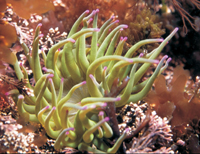
Snakelocks Anemone (Anemonia sulcata) Image: Richard Lockett
Researchers have uncovered the molecular mechanism of switchable fluorescent proteins

Switchable fluorescent proteins - able to switch themselves reversibly back-and-forth between an "on" and "off" state - have been known for only a few years. However, they already hold promise for a large number of novel applications, from cellular biology to data storage. Cell biologists, X-Ray crystallographers, photobiophysicists, and computer-biophysicists from Goettingen have worked together on a project uncovering the molecular mechanism by which a fluorescent protein becomes switched (PNAS, September 13, 2005). This knowledge could be of importance for, among other purposes, optical data storage in protein crystals.

Molecular & Cell Biology

Mount Sinai School of Medicine researchers first to discover that a protein can provide the coding information for DNA replicationSince the discovery of the structure of DNA by James Watson and Francis Crick in 1953, the paradigm for DNA replication has stated that the DNA itself codes for the appropriate pairings for replication.

Biology

Even after they have paired with a male, the female North American barn swallow still comparison-shops for sexual partners. And forget personality; the females judge males by their looks -- the reddish color of the males' breast and belly feathers.

Biology

The first, high resolution continuous record of oxygen concentration in the earth's atmosphere shows that a sharp rise in oxygen about 50 million years ago gave mammals the evolutionary boost they needed to dominate the planet, according to Paul Falkowski, Rutgers professor of marine science and lead author of a paper published Sept. 30 in the journal Science.

Biology

Remains of photosynthesizing microbes in prehistoric rocks suggest Earth was not ice-bound

A study that applied innovative techniques to previously unexamined rock formations has turned up strong evidence on the "Slushball Earth" side of a decades-long scientific argument.

The study appears in the Sept. 29 Science Express. The lead author is Alison Olcott, a Ph.D. student of earth sciences in the USC College of Letters, Arts and Sciences.

Biology

Scientists studying the humble fruit fly have found a family of proteins that enhances the sensitivity of a cell to a hormone that can trigger abnormal growth and cancer. Their discovery could lead to a completely new approach to tackling some cancers and the development of new drugs to stop uncontrolled growth in a wide variety of tumour cells.

Health & Medicine

Findings will pave the way for individually tailored therapiesContinuing its strong support for studies on how genes affect responses to medications, the National Institutes of Health anticipates spending more than $150 million over five years to renew its Pharmacogenetics Research Network (PGRN). The research of this nationwide network of scientists will eventually help doctors tailor drug prescriptions to people's unique genetic make-ups.

AIDS & HIV

The American Society for Clinical Pathology (ASCP) announced that the Society will receive approximately $1.5 million in federal funds to continue to provide laboratory training and quality improvement programs in African countries severely affected by AIDS. The training programs are for medical laboratory professionals in Africa and will continue in 2006 through the President's Emergency Plan for AIDS Relief.

Biology

MITlarva.jpg
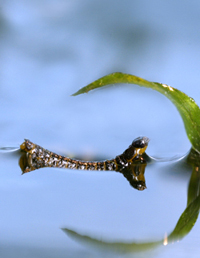
The larva of a waterlily leaf beetle gets ready to propel itself up onto a leaf using a technique recently discovered by MIT researchers. Photo courtesy Hu and Bush, 2005
MIT mathematicians have discovered how certain insects can climb what to them are steep, slippery slopes in the water's surface without moving their limbs -- and do it at high speed.

Stem Cell Research

UK scientists are working on new methods to regenerate cartilage and bone by delivering genes to stem cells within the body to instruct them to turn into bone cells. The research, funded by the Biotechnology and Biological Sciences Research Council (BBSRC), could lead to a new approach to tissue engineering. With the ageing populations of Western countries it holds the potential of significant benefits for patients needing joint replacement or similar treatments.

Microbiology

Researchers from the National Institute of Allergy and Infectious Diseases (NIAID), part of the National Institutes of Health, have made the surprising discovery that flaviviruses, which cause such serious diseases as West Nile fever, yellow fever and forms of encephalitis, evade immune system defenses in different ways depending on whether they are transmitted by mosquitoes or ticks. This finding could lead to new approaches to developing vaccines and treatments against these illnesses.

Microbiology

Iron key to nitric oxide reductionResearchers at the Georgia Institute of Technology and the John Innes Centre in the United Kingdom have uncovered a mechanism with which disease-causing bacteria may thwart the body's natural defense responses. The findings, which could ultimately lead to the development of more effective antibiotics, appear in the September 29, 2005 issue of the journal Nature.

Molecular & Cell Biology

By altering a molecule called Stat1, which is involved in cellular immune signaling, scientists have succeeded in making the molecule more responsive and thus more efficient. This old protein with a new twist may eventually be used to improve the body's defense against infection.

Microbiology

Insights may advance vaccines for related viruses including dengue fever. A monoclonal antibody that can effectively treat mice infected with West Nile virus has an intriguing secret: Contrary to scientists' expectations, it does not block the virus's ability to attach to host cells. Instead, the antibody somehow stops the infectious process at a later point.

Environment

In the immediate wake of Hurricane Katrina, scientists and research centers from across the country came together to generate information on the contaminated floodwaters and offer it to hazardous materials experts and public health officials.

Microbiology

A Cornell University virologist has isolated a highly contagious equine flu virus that is spreading a sometimes-fatal respiratory flu among dogs, and is responsible for a major dog-flu outbreak in New York state. There is no evidence that the virus could infect people.

Biology

Newly hatched magellanic penguin chicks in breeding grounds with a large number of human visitors show a significant spike in levels of a stress-related hormone compared to chicks hatched in areas not visited by humans, a University of Washington research team has found.

Biotechnology

Giant Miscanthus (Miscanthus x giganteus), a hybrid grass that can grow 13 feet high, may be a valuable renewable fuel source for the future, researchers at the University of Illinois at Urbana-Champaign say.

Gene Therapy

A newly developed virus that introduces a blood pressure-lowering gene into cells and enables that gene to maintain blood pressure at healthy levels for four months promises to take gene therapy for the disorder a step closer to reality, said researchers at Baylor College of Medicine in a report released online in the Proceedings of the National Academy of Sciences.

Biology

Leeds researchers use NERC grant to understand extreme sea creaturesExtraordinary creatures who inhabit extreme underwater conditions are being investigated by University scientists in a three-year project. These deep-sea communities could reveal an evolutionary history different to anything else on earth and even give us clues to how life could exist onother planets.

Health & Medicine

Survival of heart attack and unstable angina patients placed on beta-blocker therapy corresponds to specific variations in their genes, according to a study by researchers at Washington University School of Medicine in St. Louis and the Mid America Heart Institute in Kansas City. The study appears in the September 28, 2005 issue of the Journal of the American Medical Association.

Microarray

A collaboration of Michigan State University researchers will use a $4 million grant from the National Science Foundation to uncover the functions of genes in a plant - research which may ultimately lead to improvements in human health and agriculture.

Biology

yu0926sm.jpg
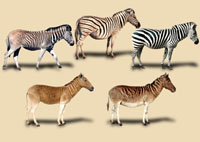
Current living zebras (top row), extinct quaggas (bottom row)
DNA from museum samples of extinct animals is providing unexpected information on the extent and effect of the Ice Age as well as the path of species evolution, according to a report by scientists from Yale University, the Smithsonian Institute and the Max Planck Institute for Evolutionary Anthropology.

Biology

The biological clock controls the circadian rhythms of a wide range of physiological and behavioral processes, from fluctuating hormone levels to sleep-wake cycles and feeding patterns. While it's well known that circadian clock elements sense and respond to light cycles, much less is known about how daily temperature cycles affect the clock's timing mechanism in vertebrates. In the open-access journal PLoS Biology, Kajori Lahiri, Nicholas Foulkes, and their colleagues study temperature related responses at the genetic and molecular level in zebrafish.

Biology

Everyone knows morning people and late-night owls. The variation in individual circadian rhythms is an anecdotal as well as experimentally verified fact. But, until now, to systematically study circadian differences (and thereby hope to rout out the underlying genetic causes), scientists have had to rely on prolonged behavioural observation. To screen for and identify circadian rhythm variations in humans, the required period of lengthy observation is prohibitively costly and labor intensive.

Biotechnology

There is little difference between the composition of the genetically produced potatoes known as fructan potatoes and that of conventionally bred varieties. They only differ in the new substances intentionally incorporated with gene technology. This conclusion has been reached by scientists at the Max Planck Institute of Molecular Plant Physiology and their colleagues from the University of Wales in a study published in the Proceedings of the National Academy of Sciences (PNAS, Online Early Edition, September 19). The scientists used a method developed at the Institute to identify substances in plants.

Molecular & Cell Biology

One teenager likes to snowboard off a cliff. Another prefers to read a book and wouldn't think of trading places. Why these differences exist is a mystery, but for the first time researchers have identified a possible genetic explanation behind risk-seeking behavior.

Molecular & Cell Biology

Vibrantly colored creatures from the depths of the South Pacific Ocean harbor toxins that potentially can act as powerful anti-cancer drugs, according to research findings from University of Wisconsin-Madison biochemists and their Italian colleagues.

AIDS & HIV

Testing for drug resistance in HIV-infected patients at the time of HIV diagnosis is cost-effective and may increase patients' life expectancy, according to an article in the Nov. 1 issue of Clinical Infectious Diseases, now available online.

Biology

Junk food could be made healthier by adding an extract of an exotic type of seaweed, say British scientists.

Health & Medicine

Seven beauty queens from four continents today appealed to girls and young women to realize that modern ideas of "beauty" can damage their bones and lead to osteoporosis later in life.

General
GeneralSeptember 25, 2005 08:11 PM

You should definitively check out the last news item about gene therapy and parkinson; it's really encouraging for further applications of the technology, and not only for Parkinson. After the fiasco some years ago (where a patient died after gene therapy), gene therapy needs every good news it can get.

0 Comments 4260 views
Gene Therapy

Investigators report safety findings and statistically significant improvements in clinical measures of movement, PET Scans at 19th Annual Symposia on the Etiology, Pathogenesis and Treatment of Parkinson's Disease and Other Movement DisordersNeurologix's Phase I trial showed positive interim results in patients with Parkinson's disease. One year following treatment, patients exhibited a statistically significant improvement in motor function on the side of their body correlating to the treated part of the brain. Further, PET scans at one year revealed that the treated side of the brain exhibited a statistically significant decrease in abnormal metabolism, results considered similar to those achieved with STN Deep Brain Stimulation.


Search Bio News Net

Free Biology Newsletter